Block Paving vs Tarmac: What To Choose & Why

Estimated reading time 7 minutes
If you are planning on a new driveway, patio or footpath, choosing between block paving and tarmac is one of the most important decisions you’ll make. Both are fantastic surfacing options that provide a host of benefits, but they aren’t always the best choice for your home or commercial property.
In some instances, block paving may work well, yet in others it won’t. The same can be said for tarmac. So, in this blog, we assess both block paving and tarmac to weigh up the best options for your property. We’ll consider cost, aesthetics, durability and more, so you can make an informed decision before contacting the Tidey & Webb team to install it for you.
What is block paving?
Block paving is a popular driveway, patio and pathway surfacing choice for many residential and commercial property owners. Made from individual blocks that fit together neatly to create varied designs, they are laid upon a compacted base to help keep them stable.
You’ll see a wide range of block paving designs on driveways, patios and paths throughout Sussex and Surrey, with herringbone and basket weave among the most popular.
What is tarmac?
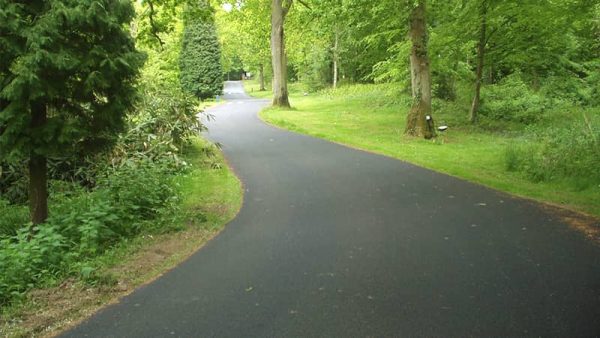
Tarmac is perhaps one of the more common surface choices for car parks, driveways, patios and paths in the South of England. Laid upon a crushed gravel base on a compacted subgrade, it provides a stable, durable and cost-effective surfacing option.
Tarmac vs block paving
We’ve looked at all the key factors homeowners and businesses should evaluate before committing to a surface type. This should help you make an informed decision; however, because each property type is different, it can sometimes be better to get specialist advice tailored to your property. Our team at Tidey & Webb can help. With more than 40 years of experience as surfacing contractors in the South, we can help guide you towards the best decision for your property.
Cost
Tarmac
Tarmac is a very cost-effective surfacing option for driveways, patios, paths, car parks and playgrounds. Durable and budget-friendly, with relatively fast installation, it seems an obvious choice, especially if there is a large space to fill and the budget is restrictive. That said, you won’t get the bespoke benefits of block paving, and your surface may resemble most of the others in the area. The cost of installing tarmac varies based on the surface area and whether you have any specific requirements. However, you could see tarmac laid for as much as 50% less than block paving.
Block paving
Block paving is generally more expensive than tarmac but is seen as a worthwhile extra expense for its customisable nature. With patterns and colours chosen by you, block paving allows for a bespoke surface that may not be duplicated anywhere else! As such, there is every chance this stunning design will help increase your kerb appeal, which in turn could see your house price rise too. Whilst prices vary depending on the size of the surface area, design complexity and materials, a block paving driveway, for example, could cost as much as £7,000.
Aesthetics
Tarmac
Tarmac is versatile and suits practically all property types. Its simple and plain appearance is perfect if you don’t want or need your chosen surface to be a statement piece. It also means that, for homeowners, when selling the property, buyers aren’t likely to be deterred by a customised surface that isn’t to their tastes!
Block paving
You could say that block paving is the opposite of tarmac when it comes to aesthetics. Where tarmac is simple, understated and plain, block paving is striking and tailored specifically to your tastes. From contemporary to classic and from intricate patterns to simple designs, its versatility means you always find a way for it to suit the rest of the space outside.
Maintenance
Tarmac
Tarmac is extremely low maintenance. Its durability means it can easily withstand the wet weather we experience across Sussex, Surrey and Hampshire. Cleaning a tarmac driveway isn’t much of a chore either, and our guide to how to remove moss from a tarmac driveway shows you how easy it can be. Potholes can form, so resurfacing is often advisable, but this isn’t always required if your tarmac surface has been installed to a high standard and is well-maintained. Oil stains can cause permanent damage, so prompt treatment is advised.
Block paving
Block paving requires more work than tarmac to keep it in optimal condition. We’ve put together a guide on maintaining block paving driveways to give you some insight. Weeds can grow between the joints, and at times, re-sanding will be necessary, but these aren’t complex jobs and won’t cost much to complete. You may also need to reseal the driveway to help maintain its colour and add further surface protection.
Durability
Tarmac
Tarmac surfaces are very durable, and, when well maintained, can last more than 10 years. They can handle heavy traffic and withstand varying weather conditions, making them a great choice for all types of property. However, if damage is left untreated or the tarmac was poorly installed, you may have to have the entire surface laid again. You’ll notice that tarmac can be prone to oil staining, which can lead to permanent surface marking. It may also crack after prolonged exposure to the sun.
Block paving
Block paving is just as durable as tarmac, perhaps even more so. It’s quite possible for a block paving surface to last more than 20 years if it is well-maintained. Unlike tarmac, damage is unlikely to result in a complete resurfacing either. Quite often, you’ll only have to replace the damaged blocks, which can be a quick and affordable process.
Block paving or tarmac? What is best for you?
Deciding whether you should choose block paving or tarmac comes down to a host of variables. Our table below lines up all the key factors. Then, further down, we’ll give an honest assessment of what may be your best choice.
| Feature | Block Paving | Tarmac |
| Cost | Higher upfront | More affordable (could be as much as 50% cheaper) |
| Aesthetics | Highly customisable | Simple, uniform appearance |
| Installation time | Slower | Faster |
| Maintenance | Moderate - may require weeding, sanding and sealing | Low, occasional cleaning and potential resurfacing |
| Durability | 20+ years with proper care | 10+ years with proper care |
| Repairs | Easy, individual blocks can be replaced | Harder, may require patching or full resurface |
| Kerb appeal | High | Neutral |
| Weather resistance | Good drainage, performs well in varied conditions | Very durable, but can soften and crack in extreme heat |
If looking at the table still doesn’t help you to decide. Perhaps think of it in four simple ways.
- If budget is your biggest concern, choose tarmac.
- If you want something to stand out and look good, choose block paving.
- If you have a large area to cover, choose tarmac.
- If you are thinking about long-term value, choose block paving.
Still unsure which surface is right for you? Contact the Tidey & Webb team. We have more than 40 years of experience installing and replacing all types of surfaces throughout Sussex, Surrey, Kent and Hampshire. With skilled, qualified professionals on hand, we are available for commercial and residential surfacing projects of all sizes. Whether it be a simple footpath, a customised patio, a bespoke driveway or a race track, we can help. Proudly members of Constructionline and SafeContractor approved, we are a name you can trust. Get your free quote today.