Is Block Paving Permeable?
Estimated reading time 6 minutes
Regular block paving isn’t permeable; however, a block paving system can be, depending on its design and installation. Block paving is perhaps one of the most popular choices for a surface material, and is commonly used for commercial and residential properties.
What is a permeable surface?
It might be best to start by clarifying what a permeable surface is. There is often some confusion regarding the terms porous and permeable. Many people think they are two words with one meaning. However, there are clear differences between the two.
- Porous surfaces: A porous surface allows water to pass through the surface material across its entirety.
- Permeable surface: A permeable surface is made of a non-porous material, but includes voids or joints that allow water to pass through into the layers below. The blocks remain impervious, but the joints and sub-base do the work.
Both are classified as acceptable permeable surfaces for planning purposes in the UK if they allow water to drain within the property boundary.
How permeable block paving works
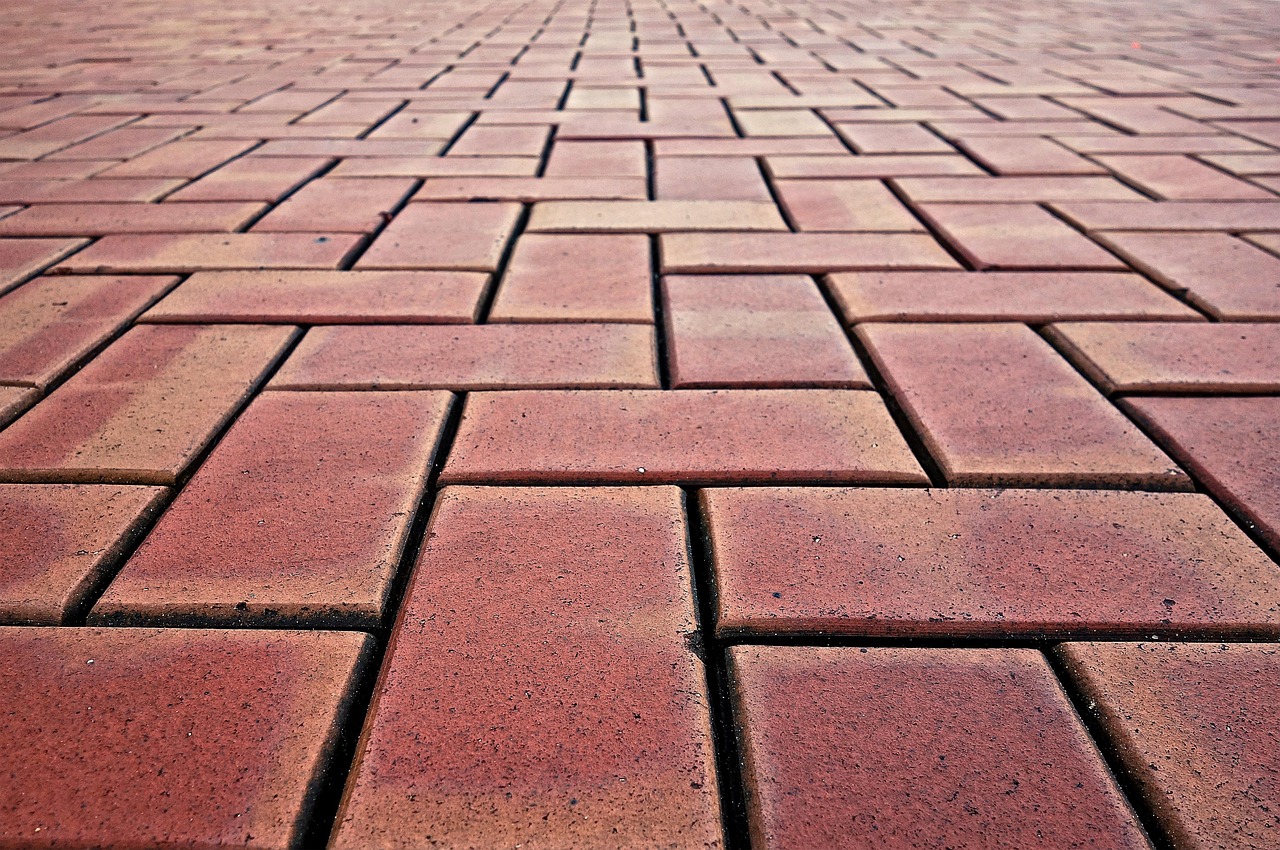
In a standard block paving installation, blocks are laid tightly together with sand-filled joints over a compacted sub-base and concrete haunching. Rainwater cannot pass through; instead, it runs off the surface towards drains or the road.
In a permeable block paving system, things work a little differently. The same materials may be used, but enlarged joints, filled with angular grit instead of sand, replace the joints you’d see in regular block paving.
Beneath the blocks, there will be a free-draining bedding layer and a deep open-graded aggregate sub-base. This will temporarily store water before it either soaks into the ground or is slowly released through an outlet.
Rainwater falls onto the surface, passes through the joints and then moves through the bedding layer and is stored in the voids of the sub-base. Think of it as the system managing water, not shedding it.
Is all block paving permeable?
No, and this can often lead to confusion for those looking to install a new surface for their home or workplace. Only block paving that has been specifically designed and installed as a permeable system qualifies as permeable.
The key differences are:
- Joint fill: Angular grit (permeable) vs kiln-dried sand (not permeable)
- Sub-base: Open-graded Type 3 aggregate (permeable) vs compacted Type 1 with concrete haunching (not permeable)
- Edge restraints: Should not prevent the overall drainage design (eg, shouldn’t trap water without an outlet in tanked systems) but they are often solid.
Many driveways use standard block paving that looks identical to a permeable installation from above, but, in practice, is completely impermeable. If you are unsure about your existing driveway, one of the easiest ways to check is to inspect the joint fill. If it is fine sand, it’s likely not a permeable block paving driveway.
Could you retrofit an existing non-permeable block paving driveway to make it permeable?
To a limited extent, yes. The sand jointing could be removed and replaced with a permeable jointing compound, but its effectiveness depends on the sub-base below. If it is not free-draining, the surface improvements will be limited.
What are the rules in the UK for permeable surfaces?
Rules vary across Wales, Scotland and Northern Ireland, but as a South of England surfacing specialist, we’ll focus on how they are applied in England.
In England, the rules for front garden surfacing changed in 2008 under the Town and Country Planning (General Permitted Development) Order. Its key point is that impermeable surfaces over 5m² require planning permission unless water is directed to a permeable area within the property. Permeable surfaces, regardless of size, do not, as long as the property isn’t subject to specific restrictions (a listed building for example).
This means that a correctly installed permeable block paving driveway will not need planning permission in most cases, whereas a regular, impermeable block paving driveway will.
Local authority requirements in the South of England
In the South of England, many local authorities have adopted stricter surface water drainage policies beyond the national baseline, particularly in areas where flood risk is deemed high. Examples include:
- Surrey: Surrey County Council is the Lead Local Flood Authority (LLFA) and has published specific SuDS guidance for householder applications in flood-prone catchments across the county.
- Kent: Kent County Council’s SuDS guidance is particularly detailed for Medway and Stour catchments as both carry significant flood risk.
- East Sussex: East Sussex County Council requires SuDS considerations. For any new installation that could increase surface water runoff to the highway or to a watercourse.
Please note that LLFA guidance can change, and checking LLFA resources before committing to a new surface installation at any property is recommended.
Maintenance for permeable block paving
Permeable block paving typically requires more maintenance than standard paving. The main issue is that the joints or sub-base may clog with leaf debris, moss and fine sediment. Over a period of five to ten years, you could see substantial drops in drainage performance without regular maintenance.
To maintain performance, you should:
- Inspect joints annually and clear build-up of moss or other debris
- Use a vacuum sweeper to clear clogged joints
- Only use a pressure washer on a low pressure and with an angled spray, ensuring joints are refilled afterwards.
- Refill the joints with angular grit every three to five years as needed.
With regular maintenance, it is quite possible to see a permeable system last for twenty years or more.
Is permeable block paving more expensive?
In most cases, yes. With a specialist joint fill and a deeper, open-graded sub-base, you can see costs range from £80-£130 per square metre, whereas the non-permeable option can range from £50-£80 per square metre. Prices can vary considerably, though; the contractor, complexity of the project and more will all determine just how much it will cost. Therefore, it is worth obtaining three or more quotes before proceeding.
Could I have permeable block paving installed on clay soil?
You could, but it requires careful and specialist design. On low-permeability soils, a Type C system is used, where water is stored in the sub-base and released slowly via a controlled outlet rather than soaking directly into the ground.
At Tidey & Webb, we put our more than 40 years of surfacing experience to good use. Our team of fully qualified experts are on hand to deliver reliable, permeable surfaces to commercial and residential properties. Backed by our Constructionline membership and being SafeContractor approved, we are the trusted name in the South. Contact us today to ask any questions or get your free quote.