What Are The Best Car Park Surface Options for my Business?
Estimated reading time 5 minutes
If the car park within your commercial space needs an upgrade, it’s worth considering the car park surface options available to you. Rushing into a decision could leave you with a car park that struggles with heavy traffic, requires lots of maintenance, has zero aesthetic appeal and floods easily. Choosing a car park surfacing specialist like Tidey & Webb helps alleviate those concerns as our expert team considers the local landscape, your specific needs and the level of traffic to deliver an optimal car park surface solution that aligns with your requirements.
In this blog, we look at some of the most common car park surfacing options to give you an idea of what may work for you, and what may be best to avoid.
Surfacing materials for car parks
There are a variety of surface materials that can be used for a car park, each lending itself to certain levels of traffic, weather conditions, budgets and design tastes.
Gravel car park surfacing
Gravel is a popular choice for some car parks, especially businesses with a limited budget or those that need a car park installed quickly. That being said, gravel also works particularly well on sites with a classic, historical aesthetic. A castle or stately home, for example, may not have the same feel if the car park is tarmac or concrete. Gravel naturally fits in with the surrounding environment and helps accentuate the classic nature of the area.
It's not without its pitfalls, though, and despite the advantages of gravel car parks, there are also some disadvantages too.
Pros of gravel car parks
- Easy to install
- Cheaper than many other surface types
- Can blend in well with the surroundings
- A variety of colours, textures and sizes are available
Cons of gravel car parks
- High maintenance
- May need constant re-laying if experiencing frequent heavy traffic
- Prone to weed growth
- Can look unsightly very quickly
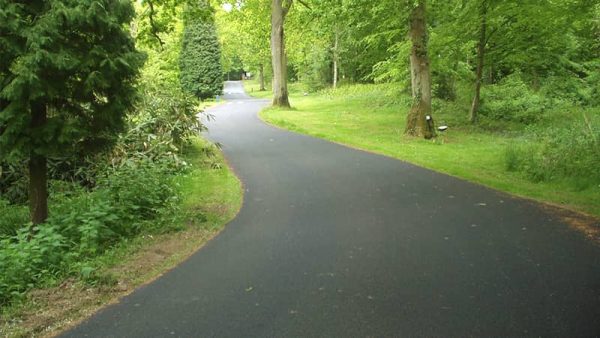
Asphalt car park surfacing
Asphalt is a very popular car park surface solution for both high and low-traffic areas. Its durable nature, low maintenance levels and general appearance make it an attractive option for many businesses. It can be expensive to install, which is a detractor for some, but its long lifespan and easy care often outweigh the financial outlay. It’s customisable too. At Tidey & Webb, we regularly install coloured asphalt surfaces that offer a hint of character to a car park or help divide it into sections. This is particularly handy for large car parks, where drivers may need a few hints to remember where they have parked. It’s porous too, meaning you’ll avoid flooding, making it much easier for clients, customers, staff and visitors to navigate.
Pros of asphalt car parks
- Low maintenance
- Long-lasting
- Porous
- Available in a range of colours
- Weed resistant
Cons of asphalt car parks
- Can be expensive to install
- Not immediately ready for use after being laid
- May develop cracks and potholes over time
Concrete car park surfacing
Concrete, much like asphalt, is a popular choice for car park surfacing. Its high levels of durability and low maintenance, mean it's frequently a preferred choice for business owners. Perfect for areas of high traffic and able to withstand variable weather conditions, it is no surprise that businesses see this as a viable commercial surfacing solution. However, its non-permeable nature means it is often best suited to car parks that are undercover rather than exposed to the elements. One feature of concrete car parks that is often highlighted as a benefit is that they can easily be line-marked to establish parking spaces, pedestrian areas and pick up points.
Pros of concrete car parks
- Very low maintenance
- Extremely durable
- Ideal for areas of heavy traffic
Cons of concrete car parks
- Non-permeable, so may be prone to flooding
- Can take up to seven days to fully set, rendering the car park out of use for some time.
- Compared to some surface types, it can be expensive
Resin-bound car park surfacing
Resin-bound surfacing is a popular choice at Tidey & Webb and is often chosen for driveways. Customisable, attractive, durable, it ticks many boxes. Whilst we may not see it in car parks as often as asphalt, concrete or gravel, it’s frequently chosen by venues looking for a small car park space that has a hint of character and leans more towards visual appeal than budget and maintenance concerns.
Pros of resin-bound car parks
- Highly durable
- Customisable
- Attractive
- Unique
Cons of resin-bound car parks
- Can be expensive, especially for large car parks
- Costly to repair
- High-maintenance
These are among the most common car park surface options found in car parks across the UK. You’ll see that each has benefits and drawbacks, so speaking with a surfacing specialist like Tidey & Webb is essential. We use our more than 40 years of experience in Sussex, Surrey, Kent and Hampshire to advise you on the best car park surfacing solution for your needs, budget and tastes. Contact our team to talk through your options.